

Honey from the Rock
March 2026
Víctor García Valderrama was born on May 15, 1948, in a small village in the Andes Mountains. His earliest years unfolded under conditions of severe deprivation. He grew up with three brothers and four sisters, and he recalls seasons when one plate of roasted potatoes had to be divided among eight hungry children. Economic lack shaped the household’s daily survival, but it did not reduce the household’s harshness. Poverty was persistent, and so was cruelty. The atmosphere at home was unstable and unsafe, and repeated abuse marked his childhood.
Víctor was born with a hearing impairment. When he entered school at seven years old, he hoped it would become a place of learning and protection. Instead, the classroom reproduced the same logic of humiliation he already knew. The teacher, a man with a gruff voice and cold eyes, treated Víctor’s disability as a target. “Deaf,” he would shout, striking Víctor with ropes and dry sticks and forcing him to roll across the dirt floor while others watched. After one year, Víctor concluded that knowledge was being offered to him at the cost of dignity. He stood up, took his raffia backpack, and never returned.
At fourteen, Víctor left his parents’ home and began working at a train station carrying sacks of coffee. He worked twelve-hour shifts for ten soles a day, roughly three dollars. Over the years, he accepted whatever labor was available. His goal remained consistent; he wanted to build a home of his own that would not reproduce the suffering he had endured. At twenty, he married with the hope of beginning a family. After five years, and deep heartbreak because they could not have children, the marriage ended.
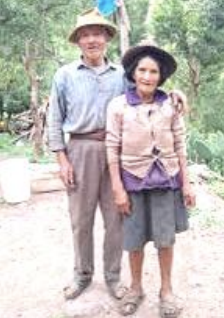
Later, Víctor met Honorata Villacorta, a disabled, mute woman who understood what it meant to be alone, overlooked, and burdened by limitations. Víctor learned to understand Honorata through her gestures and expressions, just as he had learned to navigate life with limited hearing. They married in a small adobe chapel, and over time their family grew. They welcomed four children: three daughters and a son.
To provide for his family, Víctor built a trade with his own hands. He arose before sunrise to harvest prickly pears from rocky hillsides. It was work that routinely produced wounds, bleeding, and swelling. The sweetness of the fruit did not remove the violence of the process, because thorns still pierced his skin and rock still scraped his flesh. He also worked for wages on neighboring farms, plowing with a borrowed ox as he planted potatoes and corn. Little by little, he constructed an adobe house with his own labor, a place where his children could grow up with more stability than he had known.
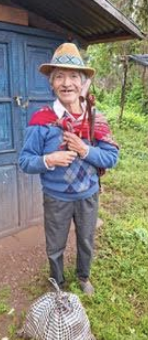
Today, Víctor and Honorata still live in that same home outside the community of Ccarhuacalla. Their children have left to find their own way, and the couple now lives alone. Age has slowed them, and they can no longer work the land as they once did. Yet every morning, Víctor still goes to the hill to collect prickly pears, even though he no longer needs to sell them. He returns because that fruit taught him a life lesson: sweetness can emerge from stone and thorns, even when the body bears the cost.
This brings to mind Psalm 81:16, which speaks of being satisfied with “honey from the rock.” The image is not delicate. It is provision where provision should not be found. Víctor’s life reflects that picture in a plain and tangible way. From rocky ground and thorny plants, he has gathered something nourishing. God has sustained him through conditions that were never easy, and never gentle.
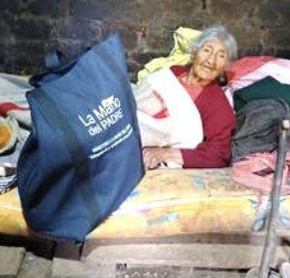
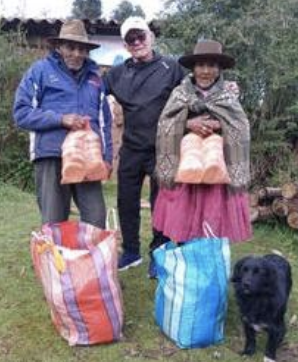
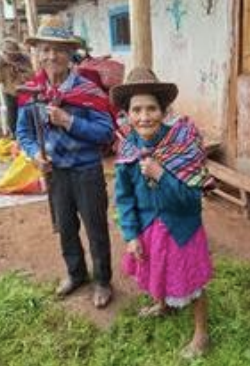
You are one of the ways God sustains Víctor and Honorata now. Through La Mano del Padre, the outreach department of Home of Refuge, Víctor and his wife receive food assistance every two weeks. This is possible because of your steady support. Despite the distance they live and the disability that affects Honorata’s walking, every fifteen days they walk two hours to receive their food, and another two hours to return home. Their routine is a visible measure of need, endurance, and resolve. They are deeply grateful to everyone who makes this ministry possible.
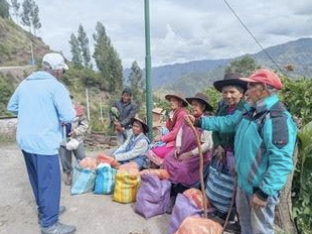
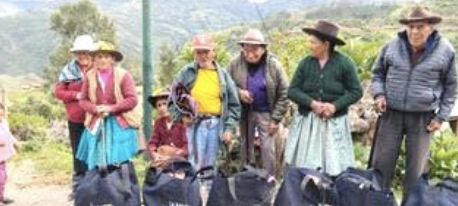
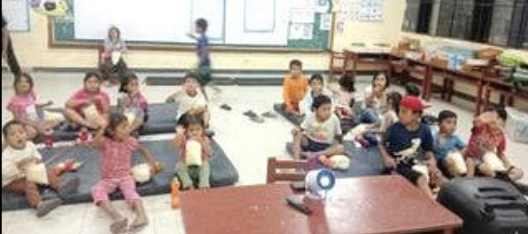
Your compassion expressed through financial support keeps this couple fed and steadied. Rosa and I cannot fully express our gratitude for your partnership. One of the ripple effects of your generosity is that it trains the eyes of others to see need and respond with action. This past month, one of our young adult volunteers, who witnesses firsthand how your giving affects the elderly, decided to address the elderly in his own home church in Cusco. There are six elderly people in need, but the church has no benevolence program and no financial capacity available for them. That reality has not restrained this young man’s determination to do what he can. Together with seven other young adults in his church group, they now gather the elderly every month, minister the Word of God to them, and provide food, which your giving is supplying.
Rosa and I were able to minister at their gathering this past week. When the pastor saw what was happening, and when he heard how Home of Refuge also meets the needs of impoverished elderly people in remote communities, he spoke to the group of young adults and affirmed what he was witnessing. He pointed to the endurance required to continue serving through adversity, and he called them to live that same message with consistent action. I share this because everything we accomplish, you accomplish. Without your support, this would not happen.
In this work, you are living the gospel alongside us as we care for the widow, the orphan, and anyone else who becomes our neighbor, as Jesus taught us to do. In closing, we also thank you for your continued prayers. You are impacting lives in ways that extend beyond what has already been described.
We now have a weekly Bible study for our staff members. One member has shown strong interest, and Rosa was able to lead her to Christ on February 12. We rejoice in her salvation and her continued discipleship. We also credit our partners with this, because you pray for us and you sustain the conditions that allow this ministry to continue. Thank you for every way you support this work. To God be the glory, and may He strengthen and direct you this month in all that you undertake. Rosa and I appreciate you.
By God’s Grace,
